
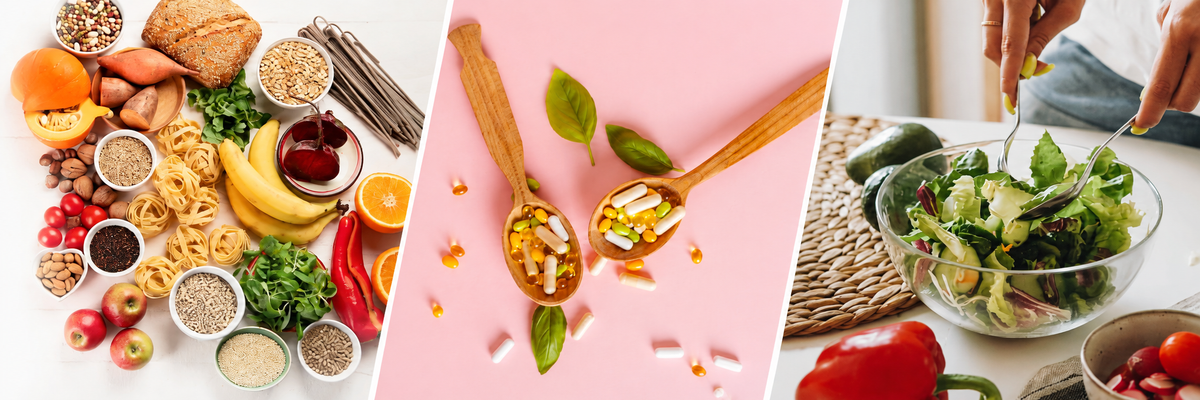
Should you be getting fiber from food or supplements? Here, we discuss the pros and cons of each, how much fiber you need, and practical ways to boost your intake, especially when you’re busy, so your schedule has little impact on your health.
Content Outline
- Is it better to get fiber from food or supplements?
- What is fiber and why is it important?
- The benefits of getting fiber from food
- The challenges of getting enough fiber from food alone
- Practical ways to increase fiber intake for busy people
- Summary
Most health experts agree that getting enough fiber every day is one of the best things you can do for your digestive health, heart health, blood sugar regulation, and general health and wellbeing. Despite this, many people in the US, the UK, and Europe aren’t getting enough fiber and are falling well short of their countries' recommended daily intakes.
Busy schedules, reliance on convenience foods such as ready meals and processed foods, and low fruit and vegetable intake all contribute to the problem.
So, with this in mind, should you focus on eating more fiber-rich foods or consider taking a fiber supplement? Both can play a valuable role in your daily fiber intake. In this guide, we’ll compare food and fiber supplements, explain their benefits and limitations, and help you decide what works best for your lifestyle.
Is it better to get fiber from food or supplements?
Fiber-rich foods should be the primary source of dietary fiber because they provide vitamins, minerals, antioxidants, and other beneficial nutrients alongside fiber. However, fiber supplements can be a convenient and effective way to help fill fiber gaps when busy lifestyles make it difficult to meet daily recommendations through food alone.
What is fiber and why is it important?
Dietary fiber is a type of carbohydrate that is found in plant-based foods that the body is unable to break down itself [1], so it travels to the colon relatively untouched, where your gut microbes ferment it into beneficial metabolites [2].
Key fiber benefits
Some of the key benefits of fiber are:
-
Supports regular bowel movements
-
Feeds beneficial gut bacteria
-
Promotes digestive comfort
-
Supports heart health
-
Helps maintain healthy cholesterol levels
-
Supports healthy blood sugar control
Fiber is also associated with better weight management and keeps you feeling fuller for longer.
How much fiber do you need?
It’s widely recommended that adults need 25 to 30 grams of fiber every day [3]. How much fiber you need will depend on several factors. For example, different countries recommend different intakes, and these can also vary between men and women. Here is a guide as to how much fiber you should be aiming for:
▶ Learn more about the modern dietary fiber gaps in our blog.
The benefits of getting fiber from food
When it comes to reaching your daily fiber needs, food is the gold standard. That’s because high-fiber foods also provide many other nutrients your body needs to stay healthy beyond fiber.
Some of the other nutrients plant foods provide include:
-
vitamins
-
minerals
-
antioxidants
-
polyphenols
Common high-fiber foods
Many of the staple plant foods you’re already eating will be high-fiber foods that support your digestive and heart health. Incorporating a mix of these foods into every meal and snack will help you hit your daily fiber goals.
|
Food |
Fiber per serving |
|
Lentils (1 cup cooked) |
15g |
|
Black beans (1 cup cooked) |
15g |
|
Pear (medium) |
5g |
|
Apple with skin |
4 to 5g |
|
Oats (1 cup cooked) |
4g |
|
Chia seeds (2 tbsp) |
10g |
|
Almonds (30g) |
3 to 4g |
|
Broccoli (1 cup cooked) |
5g |
What are the advantages of getting fiber from food?
When it comes to increasing your fiber intake, whole foods should generally be your first choice because they not only provide fiber, but also deliver a wide range of nutrients that work together to support your overall health, including vitamins, minerals, and even water, which is vital for preventing dehydration.
Whole foods can also contain a combination of soluble and insoluble fiber types, which your body needs in various quantities. Insoluble and soluble fiber have different functions in the body:
-
Insoluble fiber does not dissolve in water and stays largely undigested, drawing water into your stools to soften waste and prevent constipation. Some sources claim that at least 14 g of insoluble fiber per day is optimal for a metabolic benefit [7].
-
Soluble fibre dissolves in water to form a gel-like substance which is crucial for regulating blood sugar, lowering cholesterol, and promoting bowel regularity [8].
Together, these nutrients and different fiber types can provide numerous benefits. Getting fiber from food can:
✅ improve your overall diet quality
✅ provide multiple nutrients in one serving
✅ support greater dietary variety
✅ encourage healthy eating habits
✅ promote bowel regularity
✅ keep you feeling fuller for longer
✅ be more cost-effective
For example, choosing an apple instead of a low-fiber snack not only increases your fiber intake but also provides vitamin C, antioxidants, and hydration. Similarly, a serving of lentils delivers significant amounts of fiber alongside plant protein, iron, folate, and other important nutrients.
That said, while whole foods are the ideal source of fiber, consistently eating enough of them every day can be challenging, especially when you're juggling work, family commitments, travel, and other demands. This is where many people find that fiber supplements can play a useful supporting role alongside a healthy diet.
The challenges of getting enough fiber from food alone
While food is the ideal way to support your fiber intake, reality can sometimes get in the way. Modern lifestyles can make it difficult to consistently consume enough fiber-rich foods, whether it’s busy work schedules, a hectic home life, or difficulty finding a balance between home, work, and social commitments.
Many people can struggle to meet their fiber needs because they:
-
Skip breakfast
-
Eat on the go
-
Rely on processed foods or convenience meals
-
Frequently travel
-
Have limited time for meal preparation
-
Don’t enjoy high-fiber foods
As an example, if your daily diet consists of coffee, a sandwich, a ready meal, and a few snacks in between, you might be lucky to hit 15g of fiber. So, to reach your daily targets, you’d need to intentionally add foods like fruit, vegetables, wholegrains, nuts, and seeds throughout the day. For many busy people, who are travelling, on the go, caring, working, etc this can be easier said than done.
The benefits of fiber supplements
That’s where fiber supplements can be so beneficial because they can boost your daily fiber intake when your dietary intake falls short. However, with so many types to choose from, it can be hard to decide which is better: fiber powders, gummies, or capsules?
Fiber supplements can help:
-
Help close fiber gaps in the diet
-
Support digestive regularity
-
Provide a convenient option for busy schedules
-
Make it easier to consistently reach daily fiber goals
-
Support beneficial gut bacteria depending on the type of fiber used
For anyone who regularly falls short of the recommendations, supplements can offer a simple and effective solution.
Food vs fiber supplements: What's the difference?
|
Fiber-rich foods |
Standard fiber supplements |
||
|
Provides dietary fiber |
✓ |
✓ |
✓ |
|
How much? |
0 to 35g* |
4 to 6g |
10g |
|
Provides other nutrients e.g. vitamins, minerals, antioxidants etc |
✓ |
✗ |
✗ |
|
Preparation required? |
✓ – often |
✓ – minimal |
✓ – minimal |
|
Suitable for busy lifestyles? |
Sometimes challenging |
Yes |
Yes |
Use our How to Read a Nutrition Label for Fiber: A Shopper’s Guide to help you discover how much fiber is available in pre-prepared foods.
Can you replace fiber-rich foods with supplements?
No. Fiber supplements should not replace fruits, vegetables, legumes, whole grains, nuts, and seeds. While supplements can help increase fiber intake, whole foods provide many additional nutrients and beneficial plant compounds that supplements cannot fully replicate.
Supplements should be thought of as a tool that complements a healthy diet rather than replaces it. You should prioritize fiber-rich foods and use supplements, like The Clear Jar’s 2.5X Potent Fiber, when needed to bridge the gap.
Practical ways to increase fiber intake for busy people
Perfection isn’t necessary. Instead, you should aim to make gradual improvements to your diet and daily routine to help build your daily fiber intake. Here are some of our top tips for anyone who has a busy lifestyle:
1. Start the day with fiber
Start your day off with a fiber hit for breakfast. There are plenty of high-fiber breakfast options to choose from, such as:
-
oatmeal
-
high-fiber cereal
-
chia pudding
-
wholegrain toast
-
berries
2. Add more plants to meals
Where possible, add plant foods to each meal. For example, aim to include:
-
at least one fruit with breakfast
-
one portion of vegetables at lunch and dinner
-
beans or lentils several times per week (try adding them to stews, soups, chillis, or pasta dishes)
-
swap biscuits, pastries, and crisps for a handful of nuts or seeds or a piece of fruit
3. Add 2.5X Potent Fiber to your daily routine
If you’re consistently falling short, or just want to make sure you’re hitting your daily targets, our 2.5X Potent Fiber supplement offers a convenient way to get 36% of your daily intake in one hit.
✅ 10g of fiber in every serving
✅ Available in single-serve packs
✅ Tasteless
✅ Dissolves easily in water, smoothies, tea, and coffee
✅ Supports digestive and heart health and nourishes your gut microbiome
✅ Gentle on the gut with minimal bloating
✅ Affordable
Summary
When it comes to fiber, food should always be your foundation. Fruits, vegetables, legumes, nuts, seeds, and whole grains provide a wide range of nutrients that support overall health in addition to fiber.
However, busy lifestyles can make it challenging to consistently meet daily fiber recommendations through food alone. That's where fiber supplements can provide valuable support.
Rather than choosing one or the other, the most realistic approach is to combine both: prioritize fiber-rich foods whenever possible and use a quality fiber supplement, like our 2.5X Potent Fiber, to help fill the gaps when life gets busy.
Written by: Leanne Edermaniger, M.Sc. Leanne is a professional science writer who specializes in writing about human health and wellbeing. Her work focuses on translating complex medical science into evidence-based, practical health guidance.


