
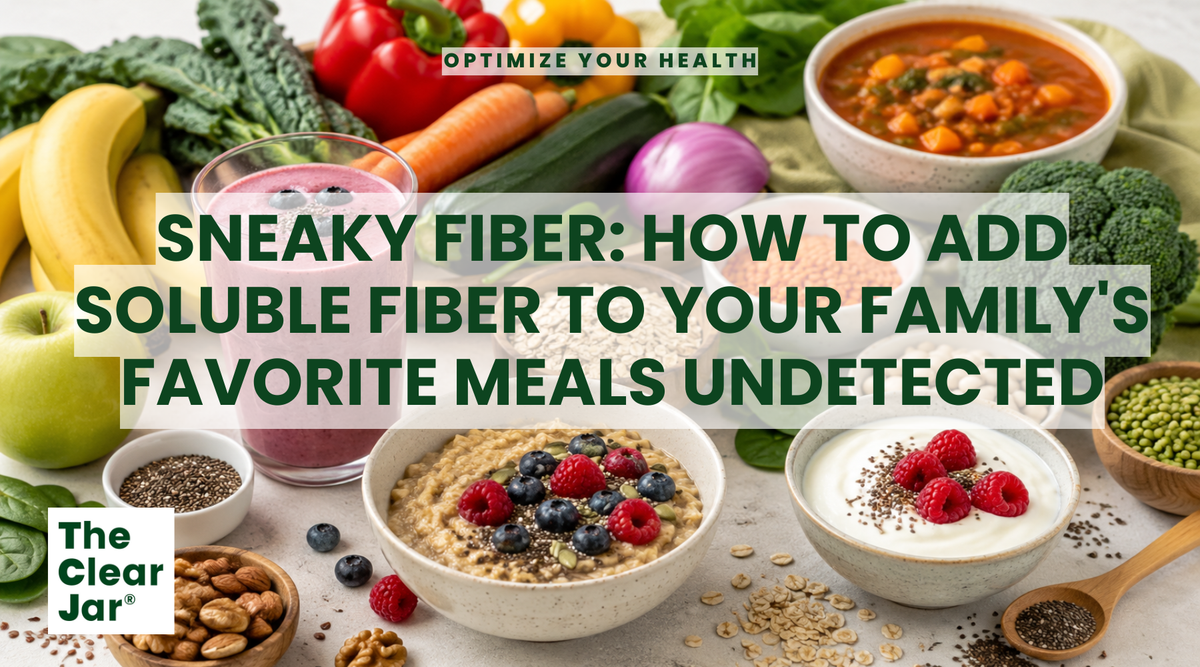
Discover simple, family-friendly ways to add more soluble fiber to everyday meals without changing the taste or texture. Healthy tips, recipes, and expert advice.
Content Outline
- Introduction
- Why is soluble fiber important?
- Why do we struggle to eat enough fiber?
- 10 ways to add soluble fiber to everyday meals
- Tips for increasing fiber without digestive discomfort
- Summary
Introduction
Getting enough fiber in your diet sounds simple, but in reality, many adults and children fall short of the recommended daily intake. Busy schedules, picky eaters, and convenience foods often mean fiber-rich ingredients are pushed aside in favour of familiar favourites.
The good news, however, is you don’t always need to completely adjust your family’s diet to get more fiber in. By making a few clever swaps and additions, you can significantly increase the amount of soluble fiber in every day meals, often without anyone even noticing.
Here, we’ll guide you through some of the practical, science-backed ways to boost fiber at breakfast, lunch, and dinner and even show you ways to make your snacks and desserts even more nutritious.
Why is soluble fiber important?
There are two main types of fiber: soluble and insoluble. Soluble fiber dissolves in water to form a gel-like substance, which slows your digestion, stabilizing blood sugar levels, reducing bad cholesterol levels, and keeping you feeling fuller for longer [1]. Soluble fiber is also considered one of the most important nutrients for your gut microbiota, the unique ecosystem residing in your colon [2].
Soluble fiber helps to:
✅ support healthy digestion
✅ feed beneficial gut bacteria
✅ maintain regular bowel movements
✅ reduce blood sugar spikes after meals
✅ keep cholesterol levels within a normal range
✅ increase feelings of fullness
Because soluble fiber dissolves so well, it is easier to hide in foods compared to coarse, insoluble fiber, which is often known as roughage [3].
Why do we struggle to eat enough fiber?
According to research, 95% of American adults [4] and children and 96% of Brits do not meet their daily fiber needs [5]. Even families who try to eat well can miss their daily fiber goals, for many different reasons.
Some of the biggest challenges include:
-
Children refusing fruit and vegetables
-
Busy evenings leading to convenience or ready meals
-
Preference for white bread, white rice, and refined cereals
-
Limited fruit and vegetable variety
-
Family members who dislike some textures of healthier foods
However, there are ways around getting more fiber into your diet without it being stressful. For example, adding fiber gradually and less noticeably can be a successful way of quietly upping your family’s fiber intake and moving to a healthier diet.
10 ways to add soluble fiber to everyday meals
Boosting your soluble fiber intake may sound stressful and feel you with dread, especially if you have picky eaters in the family, but it needn’t be. There are several easy ways you can increase your intake without anyone really noticing. Not only will you be feeding your family healthier, more nutritious meals, but you’ll also be supporting your digestion, regulating your blood sugar levels, and nourishing your gut microbiota.
Top tip: Check food labels to get a better idea about the amount of fiber in your food.
Let’s take a look at some of the things you can do to increase your soluble fiber intake.
1. Stir fiber into smoothies
Smoothies are already an excellent source of soluble fiber when they are made with whole fruits and vegetables, but you can boost their content by 36% by adding a stick of 2.5X Potent Fiber. It’s a simple yet effective way to ensure you’re getting a big fiber punch at the start of your day.
Some of the foods to include in your smoothie are:
-
Bananas
-
Berries
-
Mango
-
Yogurt or Kefir
-
Milk or plant milk
-
A dollop of nut butter
The addition of 2.5X Potent Fiber is tasteless, making it almost impossible to detect, but it provides a whopping 11g of soluble fiber in a single serving.
2. Boost your pasta sauces
Simple pasta and sauce recipes can be a great midweek meal, especially if you have busy schedules to fulfil, but they’re not always nutritious. One of the easiest swaps you can make for pasta dishes is to ditch white pasta for whole-wheat or brown varieties. Brown pasta contains around 5 to 9 grams of fiber per 100g when cooked.
To top this off, make your own tomato-based sauce, which is an excellent fiber carrier. Try adding any of the following to elevate the fiber content:
-
Pureed white beans
-
Cooked lentils
-
Pureed carrots
-
A flavourless soluble fiber supplement like 2.5X Potent Fiber
3. Add fiber to yogurt
Yogurt makes a great addition to breakfast, dessert, or even a pre- or post-workout snack, but you can pack it with fiber by adding:
-
Smashed berries
-
Presoaked chia seeds
-
Applesauce
-
Dried fruit, such as dates, apricots, and raisins
-
Granola
These additions can make yogurt a bit more exciting and healthier, and are unlikely to be received negatively by kids.
4. Add hidden fiber to your baking
Homemade baking is a great opportunity to pack in some fiber. You can enjoy some really delicious treats, but with less guilt. Here are some of things you can do:
-
Substitute 25% of your all-purpose flour for whole-wheat or oat flour. This will help maintain the light colour while increasing the fiber profile.
-
Swap eggs for a chia egg. Mix 1 tbsp of chia seeds with 3 tbsps of water, whisk together and allow to rest for 5 to 10 minutes until the chia has a thick gel-like consistency. This is enough to replace 1 egg in your recipe. Chia seeds are an excellent source of fiber and they’re also vegan friendly!
-
Swap sweet treats like chocolate chips for dried fruit and nuts or add shredded carrot to a muffin recipe.
5. Blend vegetables into soups
If you’re struggling to get family members to eat vegetables or perhaps you don’t like the texture of some, pureeing soups to naturally hide them is a great way to boost your soluble fiber intake.
Some excellent veggie choices for soups include:
-
Carrots
-
Sweet potatoes
-
Butternut squash
-
Cauliflower
-
Beans
You can also add 2.5X Potent Fiber to your soups and it won’t change the flavour or texture.
6. Hide veggies & legumes in ground meat dishes
If some of your midweek meals consist of chillis, spaghetti bolognese, tacos, or anything that includes ground beef, turkey, or plant-based mince, there are some super easy ways to add some hidden fiber.
You can do this by:
-
Mixing in some cooked lentils or beans, such as black or kidney beans - this is also a cost-effective way to increase the bulk of your meal
-
Add very finely chopped mushrooms, spinach, carrots, and onions to your dish
-
If you struggle with the texture of beans or vegetables, try mashing them and then folding them into a chilli or bolognese mix for a creamy texture
-
Swap white rice for brown or cauliflower rice for an instant fiber boost
7. Give porridge an upgrade
Oats are an excellent source of beta-glucan, one of the best-known soluble fibers that has a beneficial role in regulating blood sugar levels, obesity, and high blood pressure [6]. However, for some people, meals like porridge can seem a bit boring.
You can make them more exciting by adding:
-
Ground flaxseeds
-
Mashed banana
-
Apple puree
-
Dried fruit
8. Mix into mashed potatoes
If mashed potatoes is a staple in your household, you can increase its fiber content by mixing in pureed white beans, cauliflower, 2.5X Potent Fiber, or switch the white potatoes for sweet potatoes and carrot.
9. Add 2.5X Potent Fiber to drinks
One of the easiest ways to boost your daily soluble fiber intake is to simply add a stick (or 2) of 2.5X Potent Fiber to your morning coffee or tea, water bottle, juice, protein shake, or smoothie. Because it is soluble and mixes smoothly, it will not change the flavour or texture of your drink. So, it’s and easy way to boost your fiber intake without noticing.
Tips for increasing fiber without digestive discomfort
If you’re worried about increasing your fiber intake because it can lead to bloating and gas, there are things you can do to minimise the impact. It happens because the microbes in your gut suddenly start breaking down large amounts of fiber, which rapidly produces excess gas, which can lead to bloating, gas, and discomfort.
Here are some of the things you can do to minimise the impact of adding fiber to your diet:
-
Slowly increase your fiber intake over several weeks to help your gut get used to it.
-
Drink plenty of water throughout the day to help keep your digestive system flowing, preventing constipation.
-
Spread fiber across meals instead of consuming everything all at once.
-
Keep eating a varied diet with fruit, vegetables, wholegrains, and legumes.
-
Stay active to help support healthy digestion.
Summary
Adding more soluble fiber doesn't have to mean convincing your family to eat unfamiliar foods or giving up their favourite meals. Small, consistent changes, such as stirring fiber into smoothies, sauces, soups, and baked goods, can gradually increase daily intake while keeping meals enjoyable.
When paired with a balanced diet rich in fruits, vegetables, legumes, and whole grains, these simple swaps can help support digestive health and make it easier for the whole family to meet their fiber goals.
Written by: Leanne Edermaniger, M.Sc. Leanne is a professional science writer who specializes in writing about human health and wellbeing. Her work focuses on translating complex medical science into evidence-based, practical health guidance.


